 EN
EN
 AR
AR
 BG
BG
 HR
HR
 CS
CS
 DA
DA
 NL
NL
 FI
FI
 FR
FR
 DE
DE
 EL
EL
 IT
IT
 JA
JA
 KO
KO
 NO
NO
 PL
PL
 PT
PT
 RO
RO
 RU
RU
 ES
ES
 SV
SV
 TL
TL
 IW
IW
 ID
ID
 SR
SR
 SK
SK
 UK
UK
 VI
VI
 SQ
SQ
 HU
HU
 TH
TH
 TR
TR
 MS
MS
 GA
GA
 CY
CY
 IS
IS
 HY
HY
 AZ
AZ
 KA
KA

What Are the Most Important Features of a Professional Mess Kit?
Whether you are heading into the backcountry for a solo expedition or organizing a group camping trip with colleagues, the equipment you carry directly shapes the quality of your experience. A mess kit is one of the most foundational pieces of outdoor cooking gear, yet many buyers underestimate how much design, material quality, and functional engineering separate a professional-grade option from a basic consumer product. Understanding what distinguishes a truly capable mess kit from an ordinary one helps procurement buyers, outdoor retailers, and end users make smarter, more value-driven decisions.
A professional mess kit is defined not by a single feature but by a carefully balanced combination of attributes — lightweight construction, thermal efficiency, compact stowability, material safety, and multi-functional versatility. These qualities work together to make outdoor cooking practical, hygienic, and reliable across a wide range of environmental conditions. This article identifies and explains the most important features that define a high-quality mess kit, helping buyers and procurement professionals evaluate their options with greater precision and confidence.
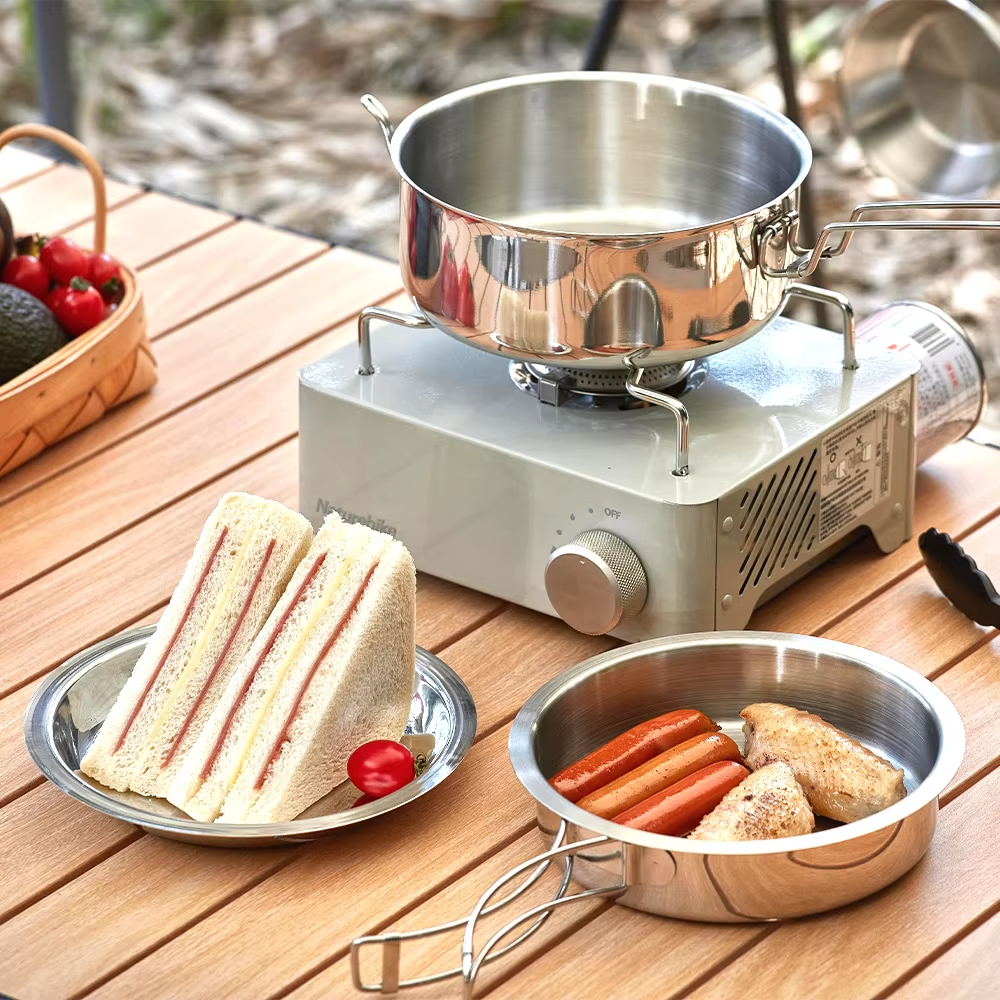
Material Selection and Its Impact on Performance
Why Material Choice Defines the Core Character of a Mess Kit
The material from which a mess kit is constructed has the most direct bearing on its weight, durability, cooking performance, and long-term reliability. The most common materials used in professional-grade kits include hard-anodized aluminum, stainless steel, and titanium. Each material offers a distinct performance profile, and serious buyers must align their material choice with the specific demands of their intended use environment.
Hard-anodized aluminum is widely regarded as the best balance of lightweight construction and cooking efficiency. The anodization process creates a surface that is both harder than standard aluminum and resistant to scratching, corrosion, and chemical leaching. This makes an aluminum mess kit an excellent choice for backpackers and field professionals who need to minimize pack weight without sacrificing functional cooking performance.
Stainless steel, on the other hand, offers superior durability and is generally easier to clean after contact with high-fat or acidic foods. A stainless steel mess kit is heavier than its aluminum counterpart but is often preferred for base-camp applications where absolute weight savings are less critical and robustness under repeated heavy use is a priority.
Titanium as a Premium Benchmark in Mess Kit Manufacturing
Titanium represents the premium end of the material spectrum for any mess kit. It is lighter than stainless steel, stronger than aluminum, and completely non-reactive with food and beverages. While the cost of titanium is notably higher, procurement buyers sourcing for military, search and rescue, or professional expedition clients often justify the investment based on the performance advantages in extreme conditions.
A titanium mess kit maintains structural integrity even after prolonged exposure to open flame, saltwater, and physical impact. For buyers focused on lifecycle cost rather than upfront price, titanium offers significantly lower replacement frequency and a lower total ownership cost over multi-year operational periods.
Regardless of the specific metal chosen, buyers should verify that no toxic coatings or low-grade alloys are present in the product. Food-contact surfaces in any professional mess kit must meet applicable safety standards to ensure that no harmful substances migrate into meals during cooking or storage.
Weight, Compactness, and Packability
The Functional Importance of Lightweight Design
For any professional or serious recreational user, the weight of a mess kit is not a minor consideration — it directly affects energy expenditure, mobility, and mission efficiency. In competitive outdoor markets, a well-engineered mess kit is expected to deliver full cooking functionality without exceeding reasonable weight thresholds. A lightweight design that does not compromise structural integrity represents genuine engineering value.
A professional mess kit should be designed with a nesting architecture that allows pots, pans, lids, and utensils to stack compactly inside one another. This minimizes the overall volume footprint in a backpack or kit bag. The nesting principle is not simply about saving space — it also protects individual components from damage during transport and creates a self-contained system that is easy to inventory and deploy.
When comparing products for procurement purposes, buyers should assess the total packed dimensions and combined weight of a complete mess kit system rather than individual components in isolation. A modular kit that packs into a compact cylindrical form factor is almost always more practical in the field than a collection of same-weight pieces that do not nest efficiently.
Packability Features That Support Real-World Field Use
Beyond raw nesting, packability in a quality mess kit involves thoughtful accessory integration. Strainer lids, foldable handles, integrated plate-and-bowl combinations, and included utensils should all fit cleanly within the pack configuration without requiring additional pouches or holders. A carabiner clip, drawstring bag, or mesh carry sack is commonly included to secure the packed kit for transport.
Foldable or detachable handles are one of the most consistently valued features in a field-tested mess kit. Fixed handles increase pack volume and create pressure points against soft gear. Folding handles that lock securely during cooking but collapse flat during packing are a strong indicator of thoughtful product engineering.
Thermal Efficiency and Cooking Performance
Heat Distribution and Its Role in a Functional Mess Kit
A mess kit designed for professional use must perform reliably on multiple heat sources — camp stoves, open fire, and alcohol burners among them. The thermal performance of a kit is shaped by the base thickness of the cookware, the conductivity of the chosen material, and the design of the vessel walls. Thin-walled cookware may save marginal weight but often results in uneven heat distribution and scorching of food, particularly when cooking over a direct flame.
For buyers evaluating a mess kit for commercial resale or organizational procurement, it is worth requesting heat distribution specifications or conducting simple boil-time tests. A kit that delivers efficient heat transfer reduces fuel consumption in the field, which has practical cost and logistical implications for extended expeditions or deployed field operations.
Lid fit is another underappreciated element of thermal performance. A well-fitting lid retains steam, reduces cooking time, and conserves fuel. Many professional-grade kits feature lids that double as plates or bowls, adding functional value without adding extra components to carry. The seal quality and edge finish of the lid indicate whether the product has been engineered for true field performance or simply assembled for retail appearance.
Compatibility with Different Heat Sources
A professional mess kit should accommodate the broadest possible range of heat sources to ensure usability across different deployment environments. Compatibility with canister stoves, alcohol stoves, solid fuel tablets, and open flame is a mark of genuine versatility. Buyers should verify that the base diameter of the primary cooking vessel is compatible with standard burner heads used in their target market.
Some mess kit designs include an integrated windscreen or are sold alongside compatible stoves as a complete cooking system. While integration can add value, standalone compatibility remains important for B2B buyers who need to configure equipment packages flexibly for different client requirements.
Durability, Safety, and Ease of Maintenance
Construction Standards That Define Long-Term Reliability
In B2B procurement contexts — whether for outdoor retail, military supply, or corporate camping programs — the durability of a mess kit directly affects total acquisition cost and customer satisfaction. A kit that develops structural failures, handle looseness, or surface corrosion within a single season creates significant warranty and replacement burden. Procurement buyers should evaluate build quality through handle rivet strength, weld consistency, surface finish uniformity, and lid-to-body fitment tolerance.
Scratch resistance matters more than many buyers initially appreciate. Scratched interior surfaces on low-quality kits can harbor bacteria and make thorough cleaning more difficult. A professional mess kit with a hard-anodized or polished interior surface is substantially easier to sanitize under field conditions where water and soap availability may be limited.
Field cleaning requirements should also inform the material selection decision. A mess kit that requires specialized cleaning tools or agents is a poor fit for most outdoor applications. Smooth, non-reactive surfaces that can be cleaned with minimal water and a simple cloth are the preferred standard for professional use.
Safety Standards and Food-Contact Compliance
Any mess kit intended for professional or commercial deployment should comply with relevant food-contact safety regulations. This includes freedom from BPA, PFOA, lead, and other substances of concern in coatings, handles, and cooking surfaces. Procurement buyers sourcing at volume should request material safety documentation and certifications as part of their standard supplier qualification process.
Handle materials — particularly those made from silicone, polypropylene, or nylon — must also be rated for the temperature ranges encountered during typical use. A handle that deforms, melts, or becomes dangerously hot during normal cooking represents both a safety risk and a product quality failure. Professional-grade mess kit handles are typically heat-resistant to at least 200°C and include an ergonomic grip profile that allows confident handling even when wearing gloves.
Multi-Functionality and System Completeness
What a Complete Professional Mess Kit Should Include
The value of a professional mess kit is significantly enhanced when it functions as a complete, self-contained cooking system rather than a collection of isolated components. A well-configured kit typically includes at minimum a large cooking pot with lid, a smaller pot or frying pan, a plate or bowl, and utensils. The ability to boil water, cook a main course, and serve a meal using only the contents of the kit defines true system completeness.
For procurement buyers building product lines or operational equipment packages, multi-person kits that scale the same design principles — nesting, lightweight materials, fold-flat handles — to serve two or more users simultaneously offer significant value. A mess kit designed to serve two to four people from a single packed unit reduces per-person equipment weight and simplifies resupply logistics for group deployments.
Utensil quality within the kit also reflects on the overall product standard. Sporks, spatulas, and cleaning brushes that are included should be made from food-safe materials, sized appropriately for the cookware dimensions, and designed to nest cleanly within the main vessel. Cheap plastic utensils that warp or stain undermine the perceived and functional quality of an otherwise strong mess kit.
Versatility Across Applications and Environments
A truly professional mess kit should perform equally well across different outdoor scenarios — backpacking, car camping, military field operations, picnic cooking, and emergency preparedness, among others. This versatility is not achieved through compromise but through thoughtful design that prioritizes the core requirements common to all these scenarios: reliability, safety, ease of use, and compact transport.
For B2B buyers, versatility also translates to broader market appeal and lower SKU complexity. A single, well-designed mess kit that performs credibly across multiple use cases serves a wider customer base than a narrow product designed for only one application type. When evaluating suppliers, buyers should assess whether the design philosophy behind the product reflects genuine field experience or purely retail-driven aesthetics.
FAQ
What materials are most commonly used in a professional mess kit?
The most common materials in a professional-grade mess kit are hard-anodized aluminum, stainless steel, and titanium. Aluminum offers the best weight-to-performance ratio, stainless steel provides maximum durability, and titanium represents the premium option combining low weight with extreme strength. The right material depends on the specific use case and weight requirements of the buyer.
How many pieces should a complete mess kit include?
A complete professional mess kit should include at minimum a large cooking pot with a fitting lid, a secondary pot or frying pan, a plate or bowl, and basic utensils. Some kits include additional items such as a cleaning brush, a strainer lid, or a cup. The defining criterion for completeness is whether the kit allows a user to boil, cook, serve, and eat a full meal without requiring any additional equipment.
Is a lightweight mess kit less durable than a heavier one?
Not necessarily. Weight reduction in a professional mess kit is achieved through material selection — such as anodized aluminum or titanium — rather than through thinning walls or reducing build quality. A properly engineered lightweight kit can be equally or more durable than a heavier stainless steel product, depending on manufacturing quality. Buyers should evaluate wall thickness, handle construction, and surface treatment rather than relying on weight alone as a durability indicator.
What should B2B buyers prioritize when sourcing a mess kit for resale or distribution?
B2B buyers sourcing a mess kit for resale should prioritize material safety certification, consistent manufacturing quality, nesting efficiency, and multi-heat-source compatibility. Durability under repeated use, food-contact compliance, and clear product documentation are equally important for reducing warranty issues and supporting end-user satisfaction. Evaluating sample units under real cooking conditions before committing to a volume order remains one of the most reliable qualification methods.
