 EN
EN
 AR
AR
 BG
BG
 HR
HR
 CS
CS
 DA
DA
 NL
NL
 FI
FI
 FR
FR
 DE
DE
 EL
EL
 IT
IT
 JA
JA
 KO
KO
 NO
NO
 PL
PL
 PT
PT
 RO
RO
 RU
RU
 ES
ES
 SV
SV
 TL
TL
 IW
IW
 ID
ID
 SR
SR
 SK
SK
 UK
UK
 VI
VI
 SQ
SQ
 HU
HU
 TH
TH
 TR
TR
 MS
MS
 GA
GA
 CY
CY
 IS
IS
 HY
HY
 AZ
AZ
 KA
KA

What Are the Benefits of Stainless Steel Camping Cookware?
Understanding the specific advantages of stainless steel camping cookware is essential for outdoor enthusiasts who demand reliability, durability, and performance from their gear. Unlike aluminum or non-stick alternatives, stainless steel camping cookware offers a unique combination of heat retention, chemical resistance, and long-term value that makes it the preferred choice for serious campers and backpackers.
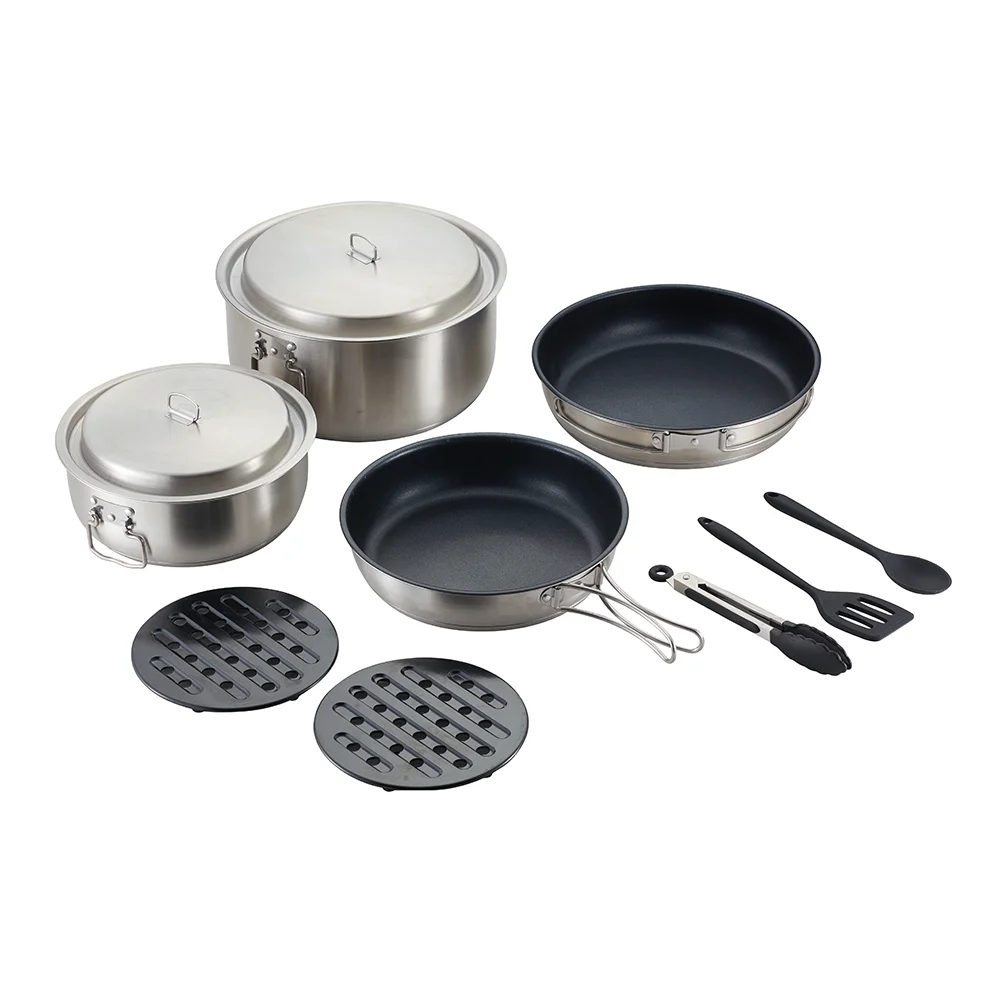
The benefits of stainless steel camping cookware extend beyond basic cooking functionality to include safety, environmental sustainability, and cost-effectiveness over time. Modern outdoor cooking demands equipment that can withstand extreme temperatures, resist corrosion from acidic foods, and maintain structural integrity through countless cooking cycles while remaining safe for food preparation in remote environments.
Durability and Longevity Advantages
Superior Structural Integrity
Stainless steel camping cookware demonstrates exceptional resistance to physical damage compared to other materials commonly used in outdoor cooking equipment. The chromium content in stainless steel creates a protective oxide layer that prevents rust and corrosion, even when exposed to moisture, salt, and varying weather conditions during extended camping trips.
This inherent toughness means that stainless steel camping cookware can withstand impacts, scratches, and temperature fluctuations without compromising its cooking performance or safety. Unlike aluminum cookware that may dent easily or non-stick surfaces that can chip and flake, stainless steel maintains its form and function through years of outdoor use.
The molecular structure of stainless steel provides resistance to warping and deformation, ensuring that pot bases remain flat for even heat distribution and lids maintain proper sealing. This structural stability is particularly important for camping scenarios where cookware may be subjected to uneven heating surfaces, direct flame contact, or rough handling during transport.
Resistance to Environmental Factors
Environmental exposure presents significant challenges for camping cookware, and stainless steel excels in resisting these harsh conditions. Salt air near coastal camping areas, acidic soil exposure, and extreme temperature variations have minimal impact on properly manufactured stainless steel camping cookware.
The chromium-nickel alloy composition provides excellent resistance to oxidation and chemical degradation, meaning that stainless steel cookware will not develop harmful compounds when exposed to outdoor elements. This resistance extends to acidic foods and beverages that might cause other materials to leach metals or develop off-flavors during cooking.
Snow, rain, and humidity conditions that can damage other cookware materials have negligible effect on stainless steel surfaces. This environmental resilience ensures consistent cooking performance regardless of weather conditions or storage environments during camping expeditions.
Health and Safety Benefits
Non-Reactive Cooking Surface
The non-reactive properties of stainless steel camping cookware provide significant health advantages for outdoor cooking applications. Unlike aluminum or cast iron alternatives, stainless steel does not leach metals into food during cooking processes, ensuring that meals maintain their intended flavor profiles without metallic tastes or potential health concerns.
This chemical inertness is particularly important when cooking acidic foods such as tomato-based sauces, citrus dishes, or vinegar-based marinades that can cause reactive metals to dissolve into food. Stainless steel camping cookware maintains food safety standards even when cooking aggressive ingredients or using acidic cleaning solutions.
The absence of chemical coatings or treatments means that stainless steel camping cookware cannot release toxic fumes or particles when heated to high temperatures, providing peace of mind for health-conscious outdoor enthusiasts who prioritize food safety during camping adventures.
Hygienic Properties
Stainless steel surfaces possess natural antimicrobial properties that support food safety in camping environments where water access and cleaning facilities may be limited. The smooth, non-porous surface of quality stainless steel camping cookware prevents bacteria accumulation and simplifies cleaning procedures.
This hygienic advantage becomes particularly valuable during multi-day camping trips where cookware must be cleaned with minimal water resources and basic cleaning supplies. The ability to achieve thorough sanitation without harsh chemicals or extensive scrubbing reduces health risks associated with foodborne pathogens in outdoor cooking scenarios.
Unlike materials with textured or coated surfaces that can harbor bacteria in microscopic crevices, stainless steel camping cookware allows for complete cleaning and sterilization using standard camping hygiene practices, supporting safe food preparation throughout extended outdoor adventures.
Performance and Cooking Advantages
Heat Distribution and Retention
The thermal properties of stainless steel camping cookware provide excellent heat retention capabilities that enhance cooking efficiency in outdoor environments. While stainless steel may heat more slowly than aluminum alternatives, it maintains temperature more consistently, reducing fuel consumption during extended cooking processes.
This heat retention characteristic proves particularly valuable for slow-cooking applications, simmering soups, or maintaining food temperature while preparing multiple dishes with limited burner availability. The thermal mass of stainless steel camping cookware helps stabilize cooking temperatures even when heat sources fluctuate due to wind conditions or fuel pressure variations.
Multi-layered stainless steel construction with aluminum or copper cores combines the durability benefits of stainless steel with enhanced heat conductivity, providing optimal cooking performance for diverse outdoor meal preparation requirements while maintaining the material advantages of stainless steel surfaces.
Versatility Across Cooking Methods
Stainless steel camping cookware demonstrates exceptional versatility across various outdoor cooking methods, from direct flame cooking to oven-style baking applications. The material's high melting point and thermal stability allow for use with wood fires, gas burners, alcohol stoves, and even direct coal placement without degradation concerns.
This versatility extends to cooking techniques that require high heat applications such as searing meats, achieving proper browning for flavor development, or rapid boiling for water purification. Stainless steel camping cookware can safely handle temperature extremes that might damage or degrade other cookware materials commonly used in outdoor applications.
The ability to transition seamlessly between different heat sources during camping trips provides flexibility for meal planning and cooking strategy adaptation based on available fuel types, weather conditions, or fire restrictions in various camping locations.
Economic and Environmental Benefits
Long-term Cost Effectiveness
The initial investment in quality stainless steel camping cookware provides exceptional long-term value compared to frequently replacing cheaper alternatives that may corrode, dent, or lose performance characteristics over time. The durability of stainless steel camping cookware often results in decades of reliable service with proper care and maintenance.
This longevity translates to reduced replacement costs and eliminates the need for backup cookware during critical camping situations. The ability to repair minor damages through polishing or reconditioning extends the usable life of stainless steel camping cookware beyond what is possible with coated or composite materials.
Professional-grade stainless steel camping cookware maintains resale value significantly better than alternative materials, providing partial cost recovery if equipment needs change or upgrades become necessary, making it a financially sound investment for serious outdoor enthusiasts.
Environmental Sustainability
Choosing stainless steel camping cookware supports environmental sustainability through reduced waste generation and resource conservation. The extended lifespan of stainless steel products minimizes the environmental impact associated with manufacturing, packaging, and disposing of replacement cookware over time.
Stainless steel is completely recyclable without quality degradation, meaning that even at the end of its useful life, stainless steel camping cookware can be reprocessed into new products without generating landfill waste. This recyclability supports circular economy principles and reduces the environmental footprint of outdoor recreation equipment.
The absence of chemical coatings or treatments in stainless steel camping cookware eliminates concerns about toxic material release during disposal or recycling processes, supporting environmentally responsible outdoor recreation practices and sustainable camping equipment choices.
FAQ
Is stainless steel camping cookware heavier than aluminum alternatives?
Yes, stainless steel camping cookware is generally heavier than aluminum options, but the weight difference is often offset by the durability and longevity benefits. Many modern stainless steel camping sets use thinner gauge construction to reduce weight while maintaining strength, and the extra weight often represents better heat retention and cooking performance for serious outdoor cooking applications.
Can stainless steel camping cookware be used on all types of camp stoves?
Stainless steel camping cookware is compatible with virtually all camp stove types including gas, alcohol, wood, and solid fuel burners. The material's high heat tolerance and non-reactive properties make it suitable for direct flame contact and high-temperature cooking methods that might damage other cookware materials commonly used in outdoor applications.
How should stainless steel camping cookware be maintained in field conditions?
Stainless steel camping cookware requires minimal maintenance in field conditions due to its non-reactive and corrosion-resistant properties. Basic cleaning with biodegradable soap and water is sufficient for most applications, and the material can be scrubbed vigorously without damage. For stubborn residues, baking soda paste or vinegar solutions provide effective cleaning without harmful chemicals.
Does stainless steel camping cookware require seasoning like cast iron?
No, stainless steel camping cookware does not require seasoning treatments like cast iron cookware. The non-reactive surface provides natural non-stick properties when properly preheated and used with appropriate amounts of cooking oil or fat. This eliminates maintenance requirements and preparation time associated with seasoned cookware while providing reliable cooking performance in outdoor environments.
