 EN
EN
 AR
AR
 BG
BG
 HR
HR
 CS
CS
 DA
DA
 NL
NL
 FI
FI
 FR
FR
 DE
DE
 EL
EL
 IT
IT
 JA
JA
 KO
KO
 NO
NO
 PL
PL
 PT
PT
 RO
RO
 RU
RU
 ES
ES
 SV
SV
 TL
TL
 IW
IW
 ID
ID
 SR
SR
 SK
SK
 UK
UK
 VI
VI
 SQ
SQ
 HU
HU
 TH
TH
 TR
TR
 MS
MS
 GA
GA
 CY
CY
 IS
IS
 HY
HY
 AZ
AZ
 KA
KA

how to choose the right aluminum canteen for military and outdoor use
Choosing the right aluminum canteen for military and outdoor use is a decision that directly affects your hydration, comfort, and safety in the field. Whether you are a soldier on extended deployment, a hiker tackling rugged backcountry trails, or a survivalist preparing for unpredictable conditions, the vessel you carry your water in matters far more than most people realize. The wrong choice can mean leaks, contamination, added weight, or a canteen that simply fails when you need it most. Understanding what separates a reliable aluminum canteen from a substandard one is the first step toward making a smart, long-term investment.
The market is filled with hydration options, from plastic bottles and stainless steel flasks to insulated pouches and collapsible containers. Yet the aluminum canteen continues to stand out as a preferred choice in both military and outdoor communities for very good reasons. It strikes an ideal balance between durability, lightweight construction, and functional simplicity. This guide is designed to walk you through every key selection factor so you can confidently pick the aluminum canteen that best fits your specific mission or adventure profile.
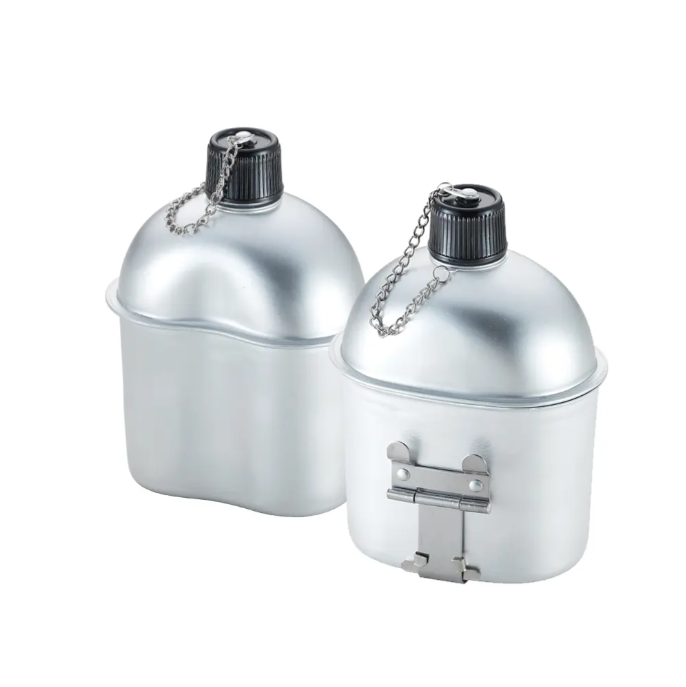
Understanding the Core Advantages of an Aluminum Canteen
Why Aluminum Remains a Top Material Choice
When evaluating hydration gear for demanding environments, material selection is one of the most critical decisions. Aluminum has been used in military and outdoor equipment for decades precisely because it offers a compelling combination of properties that few other materials match. It is significantly lighter than stainless steel, making it far easier to carry over long distances without contributing to fatigue. An aluminum canteen typically weighs considerably less than its stainless steel equivalent at the same volume, which is a meaningful advantage when every gram counts in your pack.
Beyond weight, aluminum naturally resists corrosion when properly anodized or treated, making it suitable for use in humid, wet, and muddy environments. Military operations and wilderness survival scenarios regularly expose gear to moisture, and a canteen that degrades or develops rust over time is a liability. The aluminum canteen maintains structural integrity across a wide range of environmental conditions, which is one of the core reasons it has retained its reputation in both professional and recreational outdoor settings.
Aluminum also conducts heat efficiently, which means an aluminum canteen can be placed over a fire or camp stove to heat water for cooking or sterilization purposes. This versatility is something that plastic alternatives simply cannot offer, as they are not heat-safe. For military personnel or backcountry hikers who may need to purify water on the move, this functional advantage is not a minor detail — it is a genuine operational benefit.
Comparing Aluminum to Other Common Canteen Materials
Plastic canteens are lightweight and inexpensive, but they carry long-term concerns around chemical leaching, especially when exposed to heat or UV radiation over time. BPA-free plastics have improved the safety profile, but they still do not offer the durability or heat tolerance of an aluminum canteen. Plastic surfaces also tend to absorb odors and flavors, which can make water taste unpleasant after extended use.
Stainless steel canteens are extremely durable and offer excellent resistance to impact and corrosion without any surface treatment, but they are noticeably heavier. For day hikes or car camping, that extra weight may be acceptable, but for military applications or multi-day expeditions, carrying a heavier canteen adds up quickly. The aluminum canteen occupies a practical middle ground — it is tougher than plastic, lighter than stainless steel, and versatile enough for direct heating.
Titanium is another premium option that is both lightweight and extremely strong, but it comes at a significantly higher price point. For most military and outdoor users operating within a practical budget, an aluminum canteen delivers the best overall value without compromising on essential performance characteristics.
Key Selection Criteria for Military and Outdoor Use
Capacity and Volume Requirements
One of the first decisions you need to make when selecting an aluminum canteen is the capacity that matches your hydration needs. A one-liter aluminum canteen is among the most popular formats because it offers sufficient water volume for most single-activity uses without becoming too heavy or bulky to carry comfortably. It fits neatly into standard military MOLLE pouches and most outdoor pack side pockets, making it a highly compatible choice across a wide range of gear systems.
For longer missions or extended wilderness travel where refill opportunities are limited, you may want to supplement a standard one-liter aluminum canteen with an additional container. However, carrying multiple smaller canteens is often more practical than relying on a single oversized vessel, since it distributes weight more evenly and reduces the impact of losing one container. Think about your typical daily water consumption and the expected distance between water sources before settling on a capacity.
Children, lightweight hikers, and day-use applications may find smaller formats sufficient, while military personnel engaged in long-range patrol operations will typically carry multiple hydration vessels of which an aluminum canteen of one liter is a standard component. The key is matching volume to mission duration rather than defaulting to the largest size available.
Lid and Seal Design
The lid mechanism on an aluminum canteen plays a larger role in performance than many buyers initially appreciate. A poorly sealed lid leads to leaks, which is not merely inconvenient — in cold environments, even a small amount of moisture seeping into your pack or clothing can create a serious safety concern. Look for a canteen with a tight-fitting, secure lid that uses a quality gasket or O-ring seal to prevent any spillage under normal carry conditions.
Screw-top lids are the most common design on an aluminum canteen and are preferred for their simplicity and reliability. They eliminate moving parts that could fail in the field and are easy to operate even with gloves on, which is a practical requirement in cold-weather military and outdoor scenarios. Some designs include a tethered lid that prevents it from being dropped or lost, which is worth considering for use in demanding environments.
Wide-mouth openings make it easier to fill an aluminum canteen from natural water sources, add ice, or insert a water purification tablet. Narrow openings are cleaner to drink from directly and spill less when tipped, but they are harder to fill quickly. Your choice here should depend on how and where you plan to use the canteen most frequently.
Surface Treatment and Durability Features
Not all aluminum canteens are created equal in terms of surface treatment. Anodized aluminum undergoes an electrochemical process that hardens the surface layer and improves corrosion resistance, making it more suitable for harsh field conditions. An anodized aluminum canteen is better protected against scratches, impacts, and chemical degradation compared to untreated aluminum, and the interior surface is less likely to react with water or impart any metallic taste.
Some aluminum canteen models feature a powder-coated exterior finish, which adds a layer of visual durability and color flexibility. Military users often prefer matte or earth-toned finishes that reduce reflectivity in operational environments. While aesthetic preferences may seem secondary, a non-reflective finish can be a genuine tactical consideration in certain field contexts.
Look at the thickness of the aluminum used in construction. Thinner walls reduce weight but are more susceptible to denting and deformation under rough handling. A well-balanced aluminum canteen should be thick enough to survive being dropped on rocky surfaces or compressed against other gear inside a pack, without becoming unnecessarily heavy. Construction quality is something you can often assess by handling the canteen directly and checking for uniform wall thickness.
Compatibility with Outdoor and Military Gear Systems
MOLLE and Pouch Compatibility
For military users and serious tactical outdoor enthusiasts, gear compatibility is not optional — it is a fundamental requirement. An aluminum canteen should be designed to fit standard military canteen pouches, particularly those conforming to MOLLE or ALICE systems widely used in professional contexts. A canteen that does not fit your existing pouch system forces you to improvise or carry it in a less secure manner, neither of which is acceptable in demanding operational environments.
The cylindrical shape of a standard one-liter aluminum canteen is intentionally designed to integrate with these established gear formats. When purchasing, verify the external dimensions against the specifications of your existing pouches to ensure a proper fit. Small dimensional discrepancies can make a canteen difficult to insert or remove, which is a frustrating inconvenience in the field.
For civilian outdoor users, compatibility with standard pack bottle pockets is equally important. Most pack designers engineer side pockets to accommodate one-liter bottles and canteens, so a properly sized aluminum canteen should slot in without excessive effort. Always check that the canteen can be retrieved and replaced with one hand while wearing a loaded pack, as awkward access points undermine usability on the trail.
Companion Cup and Multi-Use Accessories
Many high-quality aluminum canteen designs are sold alongside a matching canteen cup that fits over the bottom of the canteen for compact storage. This companion cup transforms the canteen system into a lightweight cooking and drinking set, which is enormously practical for both military field operations and backcountry camping. You can boil water, prepare dehydrated food, or drink hot beverages directly from the cup without carrying additional cookware.
When evaluating an aluminum canteen system, check whether the cup is included or available as an accessory, and whether it is made from a heat-safe material that can be placed directly over an open flame or camp stove. Aluminum cups conduct heat quickly, so they serve the purpose well, though they also become hot to touch and may require a handle or folding grips for safe use.
Additional accessories such as insulated sleeves, carrying straps, and carabiners can extend the utility of an aluminum canteen in various conditions. An insulated sleeve, for instance, slows both cooling in cold environments and heating in direct sunlight, helping maintain a more consistent water temperature. These add-ons are worth considering based on the specific environments in which you will be operating.
Practical Maintenance and Longevity Considerations
Cleaning and Hygiene Practices
An aluminum canteen requires consistent and proper cleaning to maintain both hygiene and material integrity over time. After each use, rinse the canteen thoroughly with clean water and allow it to dry completely with the lid off before storing. Storing a canteen with residual moisture inside is one of the fastest ways to develop odors and accelerate interior surface degradation, particularly if the interior is not anodized.
For deeper cleaning, a mild dish soap and a long-handled bottle brush are sufficient to scrub the interior without damaging the aluminum surface. Avoid using abrasive pads or harsh chemical cleaners inside an aluminum canteen, as these can scratch the protective interior coating and expose raw aluminum to direct contact with water. Over time, this can affect the taste of the water and reduce the lifespan of the canteen.
If you have used your aluminum canteen to carry anything other than clean water — such as an electrolyte drink or a flavored beverage — rinse it particularly thoroughly to prevent residue buildup. Sugary or acidic liquids left sitting in an aluminum container for extended periods can potentially cause surface degradation. A simple routine of cleaning after each use will extend the working life of your canteen significantly.
Long-Term Storage and Field Care
Proper storage practices are just as important as regular cleaning when it comes to extending the life of an aluminum canteen. Store the canteen with the lid loosened or completely off to allow air circulation and prevent any residual moisture from creating a stale environment inside. If the canteen will not be used for an extended period, consider giving it a thorough wash and complete drying before putting it away.
In cold environments, be aware that water expands when it freezes, and a completely full aluminum canteen sealed tightly may deform or have its lid stressed if the contents freeze solid. Leaving a small amount of airspace when filling in freezing conditions can reduce this risk. Additionally, inspect your canteen periodically for dents, cracks around the threading, or damage to the lid seal, as these issues can compromise the water-tightness of the container.
With consistent care, a quality aluminum canteen can last for many years across demanding uses. The relatively simple design of aluminum canteens means there are few components to fail — the primary maintenance focus should be on the lid seal and the integrity of the interior surface treatment. Replacing a worn O-ring or gasket is inexpensive and can fully restore the sealing performance of an otherwise sound canteen.
FAQ
Is an aluminum canteen safe for drinking water?
Yes, a properly manufactured and treated aluminum canteen is safe for storing and drinking water. Anodized or food-grade coated interiors prevent the aluminum from directly contacting the water, eliminating concerns about metallic taste or chemical leaching. Always ensure that the canteen you purchase is clearly marked as food-safe and uses a non-toxic interior treatment.
Can I heat water directly in an aluminum canteen over a fire?
An aluminum canteen can technically be placed near heat sources, but it is the companion cup — not the canteen body itself — that is typically used for direct heating over a flame. The canteen's lid and seal materials may not be heat-resistant, so using the cup accessory for boiling and cooking purposes is the safer and more practical approach in the field.
What size aluminum canteen is best for military and outdoor use?
A one-liter aluminum canteen is widely considered the standard for military and outdoor applications because it balances adequate water volume with manageable weight and size. It is compatible with most standard gear systems and pouches, making it a practical and versatile choice for a broad range of missions and activities. Users with higher hydration demands can carry multiple units rather than relying on a single large container.
How do I prevent a metallic taste in my aluminum canteen?
Metallic taste is most commonly associated with untreated or poorly coated aluminum. Choosing a quality aluminum canteen with a food-grade anodized interior will minimize or eliminate this issue. Additionally, thoroughly rinsing a new canteen before first use and maintaining a consistent cleaning routine will help preserve the interior coating and keep the water tasting neutral and clean over the long term.
