 EN
EN
 AR
AR
 BG
BG
 HR
HR
 CS
CS
 DA
DA
 NL
NL
 FI
FI
 FR
FR
 DE
DE
 EL
EL
 IT
IT
 JA
JA
 KO
KO
 NO
NO
 PL
PL
 PT
PT
 RO
RO
 RU
RU
 ES
ES
 SV
SV
 TL
TL
 IW
IW
 ID
ID
 SR
SR
 SK
SK
 UK
UK
 VI
VI
 SQ
SQ
 HU
HU
 TH
TH
 TR
TR
 MS
MS
 GA
GA
 CY
CY
 IS
IS
 HY
HY
 AZ
AZ
 KA
KA

Why do adventurers and survivalists rely on an aluminum canteen for long journeys
When you are deep in the backcountry, days away from the nearest water source, or navigating terrain that punishes every extra ounce in your pack, the gear you carry becomes a critical decision rather than a casual preference. Among all the items a serious adventurer or survivalist brings into the field, few are as consistently trusted as the aluminum canteen. It is not a trendy piece of gear. It is a proven tool, refined over generations of hard use, that continues to earn its place in packs, survival kits, and expedition loads around the world.
Understanding why the aluminum canteen commands such loyalty among people who depend on their gear for safety and survival requires looking beyond surface-level comparisons. The reasons are practical, physical, and deeply rooted in the realities of long-distance travel through demanding environments. From the way aluminum manages heat and cold to the way a well-made aluminum canteen resists the abuse of rough trails and remote terrain, every characteristic of this vessel serves a purpose that experienced outdoor travelers have come to depend on for decades.
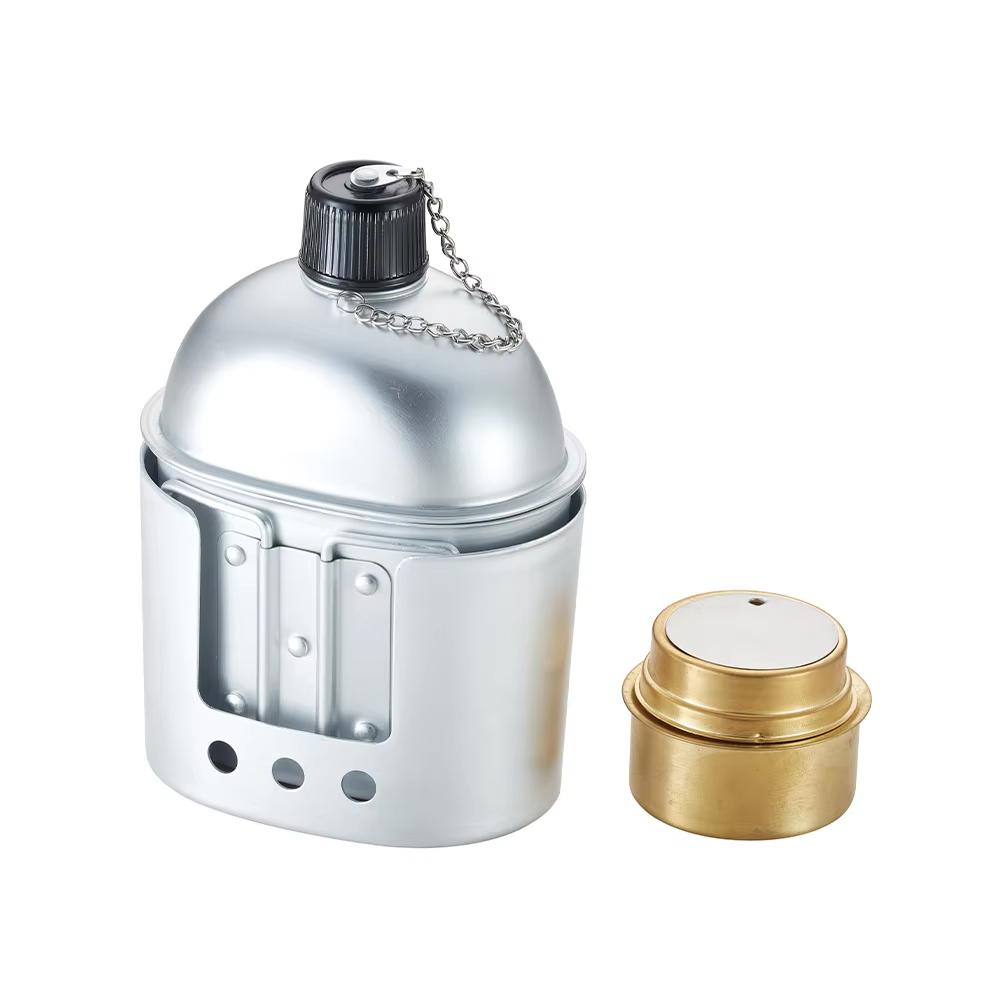
The Material Advantage of Aluminum in the Field
Why Aluminum Outperforms Alternatives Under Real Conditions
Not all hydration vessels are built to handle the full range of conditions that long journeys impose. Plastic containers crack in extreme cold, degrade under prolonged UV exposure, and can leach unwanted compounds into water when exposed to heat. Glass is far too fragile for backcountry use. Stainless steel is durable but considerably heavier, which becomes a real problem when every gram in a pack is accounted for. The aluminum canteen sits in a practical sweet spot that adventurers and survivalists have recognized for a long time.
Aluminum is naturally corrosion-resistant, which means an aluminum canteen holds up well even in humid, wet, or coastal environments where moisture is constant. The material does not rust the way iron-based metals do, and with proper care, a quality aluminum canteen can remain fully functional for many years of hard field use. This durability is not incidental — it is the reason military, wilderness, and emergency preparedness communities have made the aluminum canteen a standard piece of kit.
The physical toughness of aluminum also means the canteen resists denting and deformation better than thinner alternatives. When a container gets knocked against rock faces, dropped on hard ground, or jammed into a tight pack slot, it needs to maintain its structural integrity to remain leakproof. An aluminum canteen typically passes this test where softer or more brittle materials fail.
Thermal Conductivity as a Practical Field Benefit
One of the most underappreciated advantages of an aluminum canteen is what its thermal conductivity enables in the field. Unlike insulated plastic containers, an aluminum canteen transfers heat efficiently in both directions. This means that when a survivalist needs to heat water for drinking, cooking, or purification, they can place the aluminum canteen directly over a flame or in hot coals without destroying the vessel.
This ability to heat water directly in the canteen is a meaningful survival capability. It reduces the number of separate items a person needs to carry and simplifies the process of making water safe to drink in environments where pathogens are a concern. Many aluminum canteen designs come paired with a cup or cooking vessel that nests around the canteen itself, creating a compact and self-contained system for hydration and food preparation.
In cold environments, this thermal property also allows an adventurer to warm the canteen with body heat or near a fire to prevent the water inside from freezing. Keeping hydration accessible in sub-zero conditions is a survival priority, and the aluminum canteen handles this demand in ways that many modern alternatives simply cannot match.
Weight and Portability on Long Journeys
How an Aluminum Canteen Supports Load Management
On long journeys, whether a multi-week wilderness trek, a desert crossing, or an extended survival scenario, every item in a kit must justify its weight. The aluminum canteen consistently delivers high value relative to its mass. A one-liter aluminum canteen typically weighs well under 200 grams when empty, making it one of the lightest rigid water-carrying solutions available to field travelers.
This weight efficiency matters enormously over the course of a long journey. Cumulative pack weight affects endurance, joint stress, and the mental energy required to keep moving. Experienced long-distance hikers and survivalists routinely shave grams wherever possible, and choosing an aluminum canteen over a heavier stainless steel equivalent can contribute meaningfully to that effort without sacrificing durability or function.
The compact form of a standard aluminum canteen also makes it easy to pack and carry. Its rigid structure means it stacks predictably against other gear, does not collapse when partially empty, and can be attached to the outside of a pack via loops or clips without risk of the kind of deformation or puncture that would ruin a soft hydration bladder in rough terrain.
Compatibility with Pouches, Rigs, and Field Systems
The aluminum canteen has a long history of integration with field carrying systems. Its standard cylindrical or flat-sided form factors fit into widely available belt pouches, tactical rigs, and pack side pockets designed specifically for canteen-style containers. This compatibility is not accidental. The aluminum canteen has been a benchmark around which carrying systems have been designed for generations, which means sourcing compatible pouches and accessories is straightforward even in remote supply situations.
For survivalists who build layered gear systems, this means the aluminum canteen can be positioned on the body for rapid access, moved to a pack for load consolidation, or carried as part of a chest rig or belt kit depending on the mission profile. That flexibility makes the aluminum canteen a versatile anchor point in any field hydration strategy.
Water Safety and Purification in the Wild
Using an Aluminum Canteen for Boiling and Treating Water
Access to safe drinking water is among the most immediate survival priorities in any extended field scenario. While modern filtration systems and chemical treatment tablets are valuable tools, they can fail, run out, or be rendered ineffective by certain contaminants. Boiling remains the most universally reliable method of making water biologically safe, and the aluminum canteen is uniquely positioned to support this method directly.
Because an aluminum canteen can be placed directly over an open flame, a camp stove, or a survival fire, it allows the user to boil water inside the vessel itself. This eliminates the need for a separate cooking pot in many situations and reduces the steps required to move from raw source water to safe drinking water. In emergency conditions where time and energy are limited, that simplicity is a genuine operational advantage.
The material does not impart off-flavors to water when used for boiling, and it cleans up easily after heating. For survivalists who rotate between carrying raw source water and treated water, the aluminum canteen handles both roles without degradation or safety concerns, provided basic cleaning habits are maintained.
Durability Through Multi-Day Water Sourcing Routines
On journeys lasting multiple days or weeks, a hydration vessel goes through a demanding cycle of filling, emptying, cleaning, and refilling many times over. The aluminum canteen is designed to withstand this continuous use without the lid seals failing, the body cracking, or the surface developing contamination issues that would compromise water safety.
Aluminum's natural resistance to bacterial buildup, combined with its ease of cleaning in the field, means that an aluminum canteen used properly poses minimal contamination risk over extended use. This is a practical concern that experienced survivalists think carefully about. A container that harbors bacteria or develops mold in its seams can become a health hazard on a long journey, which is a risk the aluminum canteen largely avoids when maintained with basic field hygiene.
Reliability Under Extreme Environmental Stress
Performance in Heat, Cold, and High Altitude
Long journeys often pass through multiple environmental zones, exposing gear to temperature swings, altitude changes, and precipitation of all types. The aluminum canteen maintains consistent performance across this range of conditions in ways that make it a dependable choice regardless of where a journey leads. In desert heat, it does not warp or leach compounds. In alpine cold, it does not become brittle or crack. At high altitude, where atmospheric pressure changes affect some container types, the aluminum canteen holds its form without distortion.
This environmental versatility is a key reason survivalists in particular favor the aluminum canteen over more specialized alternatives. Survival scenarios by definition involve unpredictable conditions, and gear that performs reliably across a wide environmental range reduces the decision burden on the person carrying it. The aluminum canteen does not require special handling procedures to remain functional in extreme environments — it simply works.
Resistance to Damage from Rough Use and Accidental Impact
An aluminum canteen carried on a serious outdoor journey will be dropped, scraped, compressed, and subjected to impact on a regular basis. Its construction needs to absorb this punishment without failing at a critical moment. Aluminum, especially in the wall thicknesses used in quality outdoor canteens, resists the kind of catastrophic damage that would render a vessel unusable. Dents may occur, but dents do not typically compromise the watertight seal or the structural function of an aluminum canteen.
Survivalists and expedition hikers understand that field gear must remain functional even when it does not remain pristine. The aluminum canteen earns trust precisely because it continues to function after the kind of rough handling that long journeys inevitably deliver. This reliability under stress is not a marketing claim — it is the accumulated experience of countless field users who have returned from demanding environments with their aluminum canteen still performing exactly as needed.
Long-Term Value and Sustainability for Field Users
The Economics of a Durable Aluminum Canteen
For people who spend significant time in the field, the long-term cost profile of their gear matters. Disposable or fragile hydration options may seem inexpensive initially, but the cost of replacing failed containers adds up over time. An aluminum canteen, properly maintained, represents a one-time investment that can serve a field user for years or even decades of regular use. This economic efficiency appeals to serious adventurers who build their kit with long-term reliability in mind.
The aluminum canteen also requires minimal ongoing investment to maintain. Unlike filtration systems with replaceable cartridges or electronic hydration monitors with batteries, the aluminum canteen is a purely mechanical vessel with no consumable components. Cleaning it with water and basic field-safe soap, drying it properly between uses, and inspecting the lid seal periodically is all the maintenance it typically requires.
Environmental Considerations in the Backcountry
Many adventurers and survivalists who spend significant time in natural environments develop a strong ethic around minimizing their impact on those environments. The aluminum canteen supports this ethic in practical ways. Aluminum is a highly recyclable material, and choosing a durable aluminum canteen over disposable single-use plastic bottles reduces the volume of plastic waste generated over the course of many journeys.
Beyond recyclability, the long service life of a quality aluminum canteen means that fewer resources are consumed over time compared to replacing lower-quality alternatives. For the backcountry community, where leave-no-trace principles and environmental stewardship are central values, this lifecycle advantage reinforces the practical case for the aluminum canteen as the default hydration vessel for serious field use.
FAQ
Is an aluminum canteen safe for everyday drinking water storage?
Yes, a quality aluminum canteen is safe for everyday drinking water storage. Food-grade aluminum, particularly when treated with a protective interior lining, does not leach harmful compounds into water under normal use conditions. Cleaning the canteen regularly and avoiding storage of acidic beverages for extended periods will keep it safe and functional for long-term use.
Can you boil water directly in an aluminum canteen over an open fire?
Yes, this is one of the most valued practical advantages of the aluminum canteen in survival and backcountry contexts. Aluminum's thermal conductivity allows it to handle direct flame contact without damage, making it possible to boil and purify water inside the vessel itself. Always remove the lid before heating to allow steam to escape safely.
How does an aluminum canteen compare in weight to a stainless steel canteen of the same volume?
An aluminum canteen is typically significantly lighter than a stainless steel canteen of equivalent volume. For a one-liter capacity, an aluminum canteen often weighs between 100 and 180 grams empty, while a comparable stainless steel container typically weighs 300 grams or more. On long journeys where pack weight is carefully managed, this difference is meaningful over the course of a full day or multi-day carry.
How long does an aluminum canteen last with regular field use?
With proper care, a quality aluminum canteen can last many years of regular field use. The material resists corrosion, handles impact well, and does not degrade from UV exposure the way plastic does. The most common maintenance requirement is periodic inspection and replacement of the lid seal, which is typically a low-cost and straightforward repair that extends the canteen's service life considerably.
