 EN
EN
 AR
AR
 BG
BG
 HR
HR
 CS
CS
 DA
DA
 NL
NL
 FI
FI
 FR
FR
 DE
DE
 EL
EL
 IT
IT
 JA
JA
 KO
KO
 NO
NO
 PL
PL
 PT
PT
 RO
RO
 RU
RU
 ES
ES
 SV
SV
 TL
TL
 IW
IW
 ID
ID
 SR
SR
 SK
SK
 UK
UK
 VI
VI
 SQ
SQ
 HU
HU
 TH
TH
 TR
TR
 MS
MS
 GA
GA
 CY
CY
 IS
IS
 HY
HY
 AZ
AZ
 KA
KA

What Should Buyers Look for When Sourcing Camping Cookware in Bulk?
Sourcing camping cookware in bulk requires careful consideration of multiple factors that directly impact product quality, customer satisfaction, and business profitability. Whether you're a retailer, distributor, or outdoor equipment manufacturer, understanding the essential criteria for bulk camping cookware procurement can significantly enhance your sourcing strategy. The outdoor recreation market continues to expand globally, driving increased demand for reliable and durable camping cookware solutions that meet diverse consumer needs.
Material Quality and Durability Standards
Stainless Steel Construction Benefits
When evaluating camping cookware for bulk purchasing, stainless steel construction represents one of the most reliable material choices available in today's market. High-grade stainless steel offers exceptional resistance to corrosion, rust, and impact damage that commonly occurs during outdoor adventures. Professional buyers should prioritize camping cookware manufactured from 18/8 or 18/10 stainless steel grades, which provide optimal durability and food safety standards. These steel compositions ensure long-term performance while maintaining the aesthetic appeal that consumers expect from premium outdoor equipment.
The thermal conductivity properties of quality stainless steel camping cookware enable even heat distribution across cooking surfaces, reducing hot spots that can burn food during outdoor meal preparation. Additionally, stainless steel construction allows for easy cleaning and maintenance, which outdoor enthusiasts particularly value during extended camping trips. Bulk buyers should verify that potential suppliers utilize food-grade stainless steel materials that meet international safety standards and regulations.
Alternative Material Considerations
While stainless steel dominates the premium camping cookware market, bulk buyers should also consider alternative materials that may suit specific market segments or price points. Aluminum camping cookware offers lightweight advantages that appeal to backpackers and hiking enthusiasts who prioritize gear weight reduction. However, aluminum products require careful evaluation of coating quality and anodization processes to ensure durability and food safety compliance.
Titanium camping cookware represents the ultra-premium segment, offering exceptional strength-to-weight ratios and corrosion resistance. However, the higher cost of titanium materials makes bulk purchasing more challenging for price-sensitive markets. Cast iron camping cookware appeals to car camping and glamping segments but requires different handling and maintenance considerations that impact bulk storage and distribution logistics.
Manufacturing Standards and Quality Control
Production Process Evaluation
Successful bulk camping cookware sourcing requires thorough evaluation of manufacturer production processes and quality control systems. Reputable camping cookware manufacturers implement comprehensive quality assurance protocols throughout each production stage, from raw material inspection to final product testing. Bulk buyers should request detailed information about manufacturing facilities, certifications, and quality control procedures before committing to large-order purchases.
Professional camping cookware manufacturers typically maintain ISO certification standards and implement statistical process control methods to ensure consistent product quality across production runs. These quality systems help minimize defect rates and ensure that bulk orders meet specified performance standards. Buyers should also investigate manufacturer capacity capabilities to ensure reliable delivery schedules for large quantity orders.
Testing and Certification Requirements
Quality camping cookware must undergo rigorous testing procedures to verify performance characteristics and safety compliance. Professional bulk buyers should prioritize suppliers who conduct comprehensive testing protocols including thermal shock resistance, handle strength evaluation, and food safety compliance verification. These testing procedures ensure that camping cookware meets the demanding conditions of outdoor use while maintaining safety standards.
International certification standards such as FDA approval for food contact surfaces and LFGB compliance for European markets represent essential requirements for bulk camping cookware procurement. Suppliers should provide documentation of all relevant certifications and testing results to support quality claims and regulatory compliance requirements.
Design Features and Functionality
Space-Efficient Nesting Systems
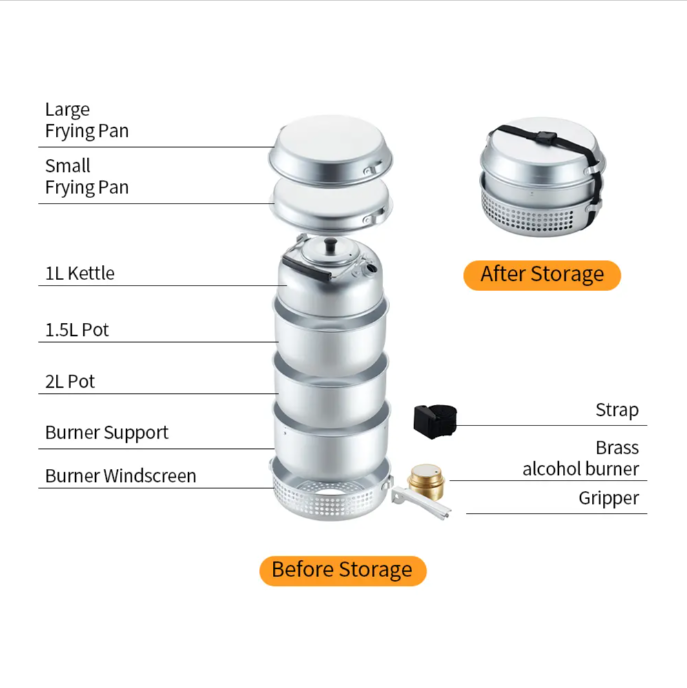
Modern camping cookware design emphasizes space efficiency through innovative nesting systems that minimize packed volume while maximizing functionality. Bulk buyers should evaluate how camping cookware pieces fit together within complete sets, considering both storage efficiency for retailers and practical benefits for end consumers. Well-designed nesting systems can significantly reduce packaging and shipping costs while improving product appeal to space-conscious outdoor enthusiasts.
Professional camping cookware manufacturers integrate telescoping handles, removable components, and stackable designs that optimize storage efficiency without compromising cooking performance. These design features particularly appeal to backpacking and RV camping markets where space limitations drive purchasing decisions.
Handle Design and Heat Management
Handle design represents a critical functionality aspect that directly impacts user safety and cooking performance in camping cookware applications. Quality camping cookware features ergonomically designed handles with appropriate heat insulation properties to prevent burns during cooking operations. Bulk buyers should evaluate handle attachment methods, materials, and durability under repeated heating cycles.
Removable or folding handle systems offer additional space-saving benefits while maintaining cooking functionality. However, these designs require careful evaluation of locking mechanisms and connection strength to ensure reliable performance during extended outdoor use. Heat-resistant handle materials such as silicone or specialized plastics provide safe handling capabilities even during high-temperature cooking applications.
Market Positioning and Price Considerations
Target Market Analysis
Successful bulk camping cookware sourcing requires clear understanding of target market segments and their specific requirements. Entry-level camping cookware appeals to occasional campers and budget-conscious consumers who prioritize basic functionality and affordable pricing. Mid-range camping cookware targets regular outdoor enthusiasts seeking balanced performance and durability characteristics. Premium camping cookware serves serious outdoor adventurers and professional applications requiring maximum performance and reliability.
Each market segment presents different volume opportunities and profit margins that influence bulk sourcing strategies. Retailers serving multiple market segments may benefit from diversified camping cookware portfolios that address various price points and performance requirements. Understanding consumer preferences within specific market segments helps optimize product selection and inventory investment decisions.
Volume Pricing and MOQ Considerations
Camping cookware manufacturers typically offer tiered pricing structures based on order quantities, with significant cost reductions available for bulk purchases. Minimum order quantity requirements vary substantially between suppliers, ranging from hundreds to thousands of units depending on product complexity and manufacturer policies. Bulk buyers should carefully evaluate total cost implications including shipping, customs, and inventory carrying costs when comparing supplier proposals.
Long-term supply agreements can provide additional cost advantages and supply chain stability for high-volume camping cookware buyers. These arrangements often include guaranteed pricing periods, priority production scheduling, and customization options that support business growth objectives. However, such agreements require careful evaluation of demand forecasting accuracy and inventory management capabilities.
Supplier Evaluation and Relationship Management
Manufacturing Capability Assessment
Comprehensive supplier evaluation encompasses manufacturing capacity, quality systems, financial stability, and communication capabilities that directly impact bulk camping cookware sourcing success. Professional buyers should conduct facility audits or request detailed capability assessments to verify supplier claims and production capacity. Manufacturing equipment age, maintenance programs, and technology investments indicate supplier commitment to quality and continuous improvement.
Geographic location affects shipping costs, delivery times, and communication convenience for ongoing business relationships. Domestic camping cookware suppliers may offer advantages in communication, quality control access, and faster delivery times, while international suppliers often provide cost advantages for large volume purchases. Risk assessment should consider political stability, currency fluctuations, and trade policy impacts on long-term supplier relationships.
Communication and Support Services
Effective communication and technical support services represent essential elements of successful camping cookware supplier relationships. Professional suppliers provide responsive customer service, technical documentation, and problem-solving assistance throughout the business relationship. Multi-language support capabilities and time zone compatibility facilitate smooth business operations for international sourcing arrangements.
Value-added services such as custom packaging, labeling, and product documentation can significantly reduce operational complexity and costs for bulk buyers. Some camping cookware manufacturers offer marketing support materials, product training, and sales assistance that enhance the overall value proposition beyond basic product supply.
Quality Assurance and Inspection Protocols
Pre-Shipment Inspection Procedures
Implementing comprehensive quality assurance protocols protects bulk buyers from receiving defective or substandard camping cookware products. Professional inspection services provide independent verification of product quality, specifications compliance, and packaging standards before shipment approval. These services particularly benefit buyers working with new suppliers or ordering products with complex specifications.
Statistical sampling methods enable efficient quality verification across large production runs without requiring 100% product inspection. Industry-standard inspection protocols for camping cookware include dimensional verification, surface finish evaluation, functionality testing, and packaging assessment. Clear quality acceptance criteria should be established before production begins to avoid disputes and delivery delays.
Ongoing Quality Monitoring
Long-term supplier relationships require continuous quality monitoring systems that track performance trends and identify potential issues before they impact customer satisfaction. Regular quality reporting, defect rate tracking, and customer feedback analysis provide valuable insights for supplier performance evaluation and improvement initiatives.
Collaborative quality improvement programs with camping cookware suppliers can enhance product performance while reducing costs and delivery times. These partnerships often include joint problem-solving efforts, technology sharing, and process improvement initiatives that benefit both parties through improved efficiency and quality outcomes.
Logistics and Distribution Planning
Shipping and Warehousing Considerations
Bulk camping cookware sourcing requires careful logistics planning to optimize transportation costs and delivery schedules. Product weight, volume, and fragility characteristics influence shipping method selection and packaging requirements. Sea freight typically offers the most cost-effective transportation for large camping cookware orders, while air freight provides faster delivery for urgent requirements or high-value products.
Warehousing requirements include adequate space for inventory storage, handling equipment for heavy products, and climate control for certain packaging materials. Distribution logistics should consider seasonal demand patterns common in camping cookware markets, with peak sales periods typically coinciding with spring and summer outdoor activity seasons.
Inventory Management Strategies
Effective inventory management balances carrying costs against stockout risks while optimizing cash flow and customer service levels. Camping cookware demand often exhibits seasonal fluctuations that require careful demand forecasting and inventory planning strategies. Safety stock levels should account for supplier lead times, demand variability, and service level objectives.
Just-in-time delivery arrangements can reduce inventory carrying costs while maintaining product availability for customers. However, these arrangements require reliable suppliers with consistent quality performance and flexible production scheduling capabilities. Backup supplier relationships provide additional security against supply disruptions and capacity limitations.
FAQ
What minimum order quantities should buyers expect when sourcing camping cookware in bulk
Most camping cookware manufacturers require minimum order quantities ranging from 500 to 5,000 units depending on product complexity and customization requirements. Stainless steel camping cookware typically has lower MOQs compared to specialized materials or custom designs. Buyers should negotiate MOQ terms based on their market size and growth projections while considering inventory carrying costs and cash flow impacts.
How can buyers verify the quality of camping cookware before placing large orders
Professional buyers should request product samples for thorough testing and evaluation before committing to bulk orders. Third-party inspection services provide independent quality verification during production or before shipment. Factory audits help assess manufacturing capabilities and quality control systems. Additionally, reviewing supplier certifications, customer references, and production facility documentation provides valuable insight into quality capabilities.
What factors most significantly impact camping cookware pricing in bulk purchases
Material costs represent the largest pricing factor, with stainless steel grade and thickness directly affecting unit prices. Order quantities create significant pricing leverage, with volume discounts typically ranging from 10-30% for bulk purchases. Manufacturing complexity, customization requirements, and packaging specifications also influence final pricing. Geographic location affects shipping costs and lead times, which impact total landed costs for bulk orders.
How should buyers evaluate camping cookware suppliers for long-term partnerships
Supplier evaluation should encompass manufacturing capacity, quality systems, financial stability, and communication capabilities. Production facility assessments verify claimed capabilities and identify potential risks. Quality certifications and testing procedures indicate commitment to consistent product standards. Financial stability analysis helps ensure supplier viability for ongoing business relationships. Communication responsiveness and technical support capabilities facilitate smooth business operations and problem resolution.
